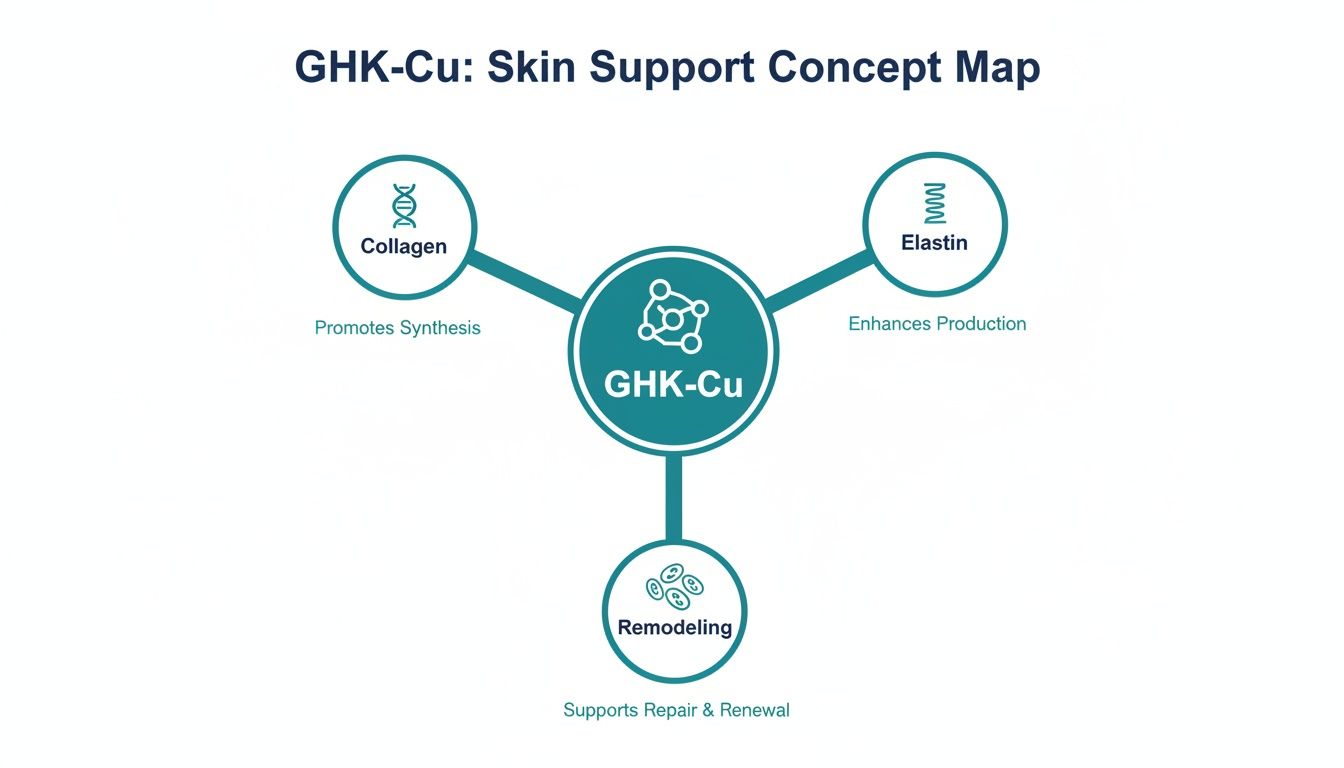
GHK-Cu stands for Glycyl-L-Histidyl-L-Lysine-Copper, a naturally occurring copper peptide found in human plasma, saliva, and urine
Ethics statement The studies involving humans were approved by Ethics Committee of the German Sports University Cologne (012/2024)
Call 224-435-4280 Medical Disclaimer: This article is for informational purposes only and does not constitute medical advice, diagnosis, or treatment
The patient should be informed of the nature of the technique or device being used, its scientific basis, its benefits, and any possible drawbacks or criticisms from other practitioners. To date, no sports organizations have officially declared BPC-157 to be a banned substance but it is possible that an organization like the NCAA could prohibit it under the category Peptide Hormones and Analogues [5]: Any substance that is chemically related to one of the above classes, even if it is not listed as an example, is also banned! With that being said, peptides like BPC-157 are not listed for human consumption
The standardized spray formulation supports investigations into peptide stability, formulation science, intracellular signaling, and intranasal delivery systems while maintaining rigorous analytical quality standards for Research Use Only applications
Research applications In vitro, investigators use GHK-Cu as a model copper-peptide when examining copper transport and coordination chemistry, and when probing interactions with extracellular-matrix (ECM) components